Tesseract Prism: Rules in Motion
One layout. Every pulse. The rules keep changing.
Pro game

Puzzle
Tesseract Prism: Rules in Motion
One layout. Every pulse. The rules keep changing.
This game could not load.
About Tesseract Prism: Rules in Motion
Tesseract Prism: Rules in Motion is a light puzzle on a floating bench in a gravity research station. A capsule cannon fires pulses of light across a layout of glass tiles, dark-matter blocks, mirrors and prisms. A hexagonal sensor latches, and stays lit, the first time the light that reaches it is exactly the colours it wants. Your job is to set a few mirrors and prisms so that by the end of the sequence every sensor has latched.
The twist is in the title: you do not fire one pulse, you fire a sequence, and between pulses a rule of the bench changes. Every mirror may invert, so a pane leaning right now leans left. Shutters may swap places: the one that blocked the light lifts and the one that was open drops. The source may retune from white light to red, green or blue only. You set one layout, once, and it has to do its job under every rule in the sequence: each pulse in a room latches a sensor that no other pulse can.
When the rules change, a gravity pulse crosses the bench: a ring of light races out, the spacetime grid behind the bench bends around it, the panes flip over and the source retunes. Six hand-ordered benches, each with a par the game's own solver worked out, then endless higher orbits and a daily bench that is the same for everyone. Undo, redo and hints are always there, nothing is timed, and your progress stays in this browser.
How to play
- Latch every hexagonal sensor. It latches, and stays lit, the first time the light reaching it is exactly the colours it wants.
- Fire sends a sequence of pulses through the layout you set. Between pulses a rule of the bench changes.
- Mirrors may invert, shutters may swap places, and the source may change colour. One layout must work for every pulse.
- Tap a free tile to set a mirror or a prism, tap a mirror to turn it through four leanings, and again to take it back.
- Solve a bench with par pieces and no hint for three stars. Sensors latched and a first-run bonus add flux.
Controls
- Tap or click the bench — set a piece, turn a mirror, take it back
- Arrow keys, WASD, D-pad or stick — move the bench cursor; Enter or Ⓐ — set, turn or take back
- Space, F, Ⓧ or Fire — fire the sequence; Z or Undo — undo; H or Hint — a hint
- P, Escape or Start — pause
Frequently asked questions
What does latching mean?
A sensor latches the first time the light that reaches it is exactly the colours it wants, in any pulse of the sequence, and then it stays lit. The room is solved when every sensor has latched by the end of the sequence.
What changes between pulses?
One or more of three things: every mirror inverts (a pane leaning right leans left), the shutters swap (shut ones lift, open ones drop), or the source retunes to another colour. The briefing names the change before each pulse, and the bench shows it with a gravity pulse.
Why does my layout light a sensor in only one pulse?
Because the rules change, one layout lights different things in different pulses. In each room every pulse of the answer latches a sensor that no other pulse can, so the layout has to serve all of them.
How are stars and par worked out?
The game's own solver finds the fewest pieces that latch every sensor across the whole sequence: that is par. Par pieces with no hint earn three stars, one more two, any solved bench one; a bench solved after a hint earns at most two.
Can I calm the effects down?
Yes. Pulse speed has three settings, the spacetime warp and the pulse trails can be turned off, and the kit's own settings cover reduced motion, fewer flashes, large text, sound and music.
Does the game save?
Yes, in this browser: solved benches, stars and the bench you were working on with your pieces in place. Nothing is uploaded.
Related games
All Puzzle games → Vector Labyrinth: Rules in Motion Dock it gently. Then the field shifts. Pro game
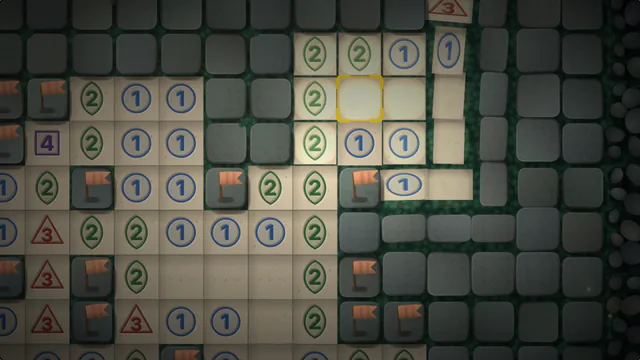 Minesweeper Clear the board without clicking a mine — use the numbers as clues. Pro game
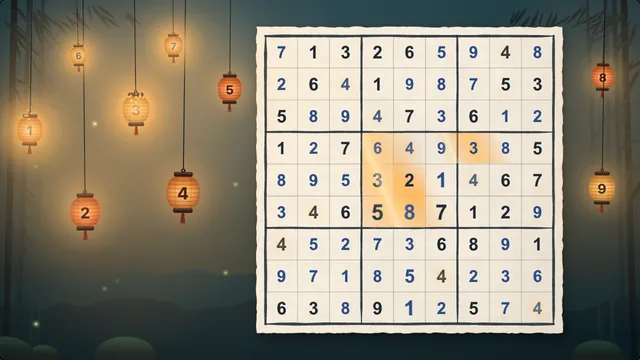 Sudoku A handmade grid under nine paper lanterns. Fill every row, column and box with 1 to 9. Pro game
 Merge Numbers Slide, merge matching gems and chase the highest stone you can make. Pro game
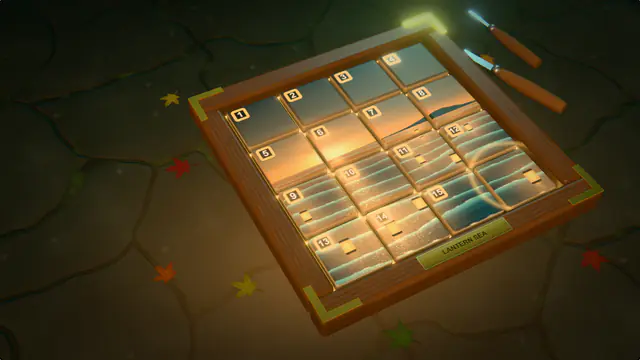 Sliding Puzzle Slide the carved tiles back into place and bring the painting to life. Pro game
 Prism Orchard: Chainburst Plan two swaps, release them together, and split the sunrise with a chain. Pro game