Tesseract Pendulum: The Missing Axis
One colour is missing from your lens. Where does it go?
Pro game
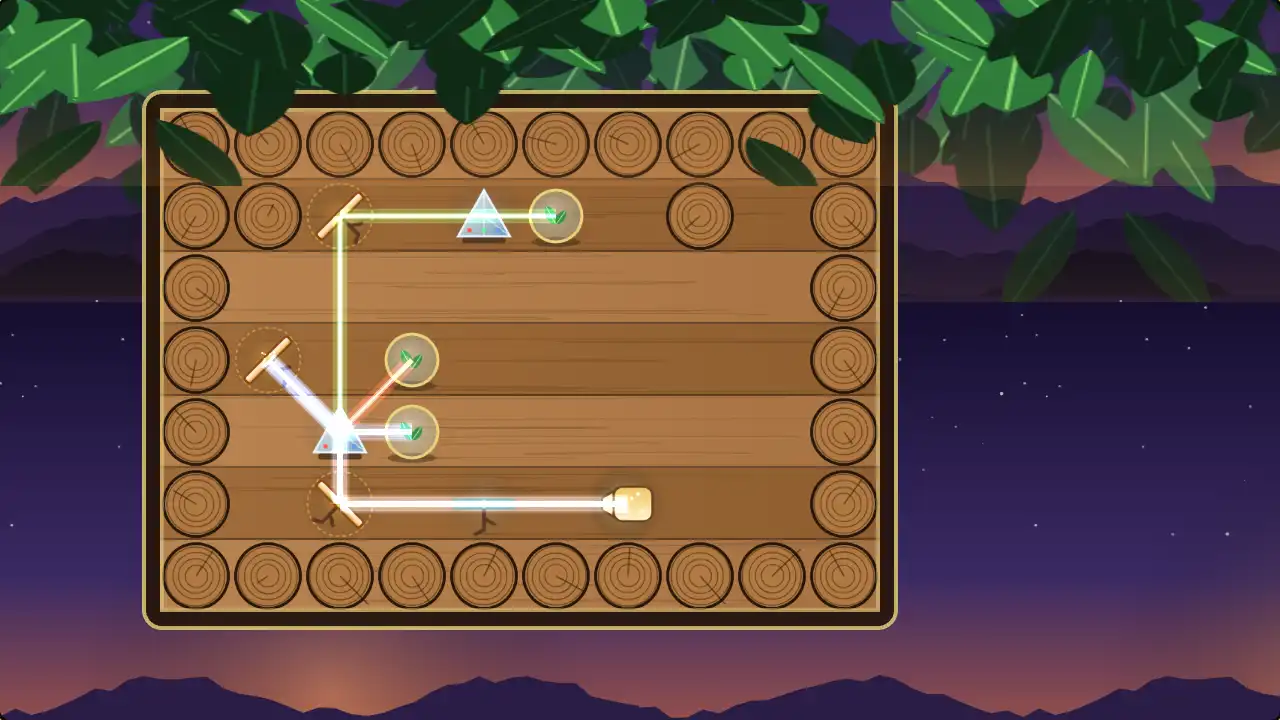
Puzzle
Tesseract Pendulum: The Missing Axis
One colour is missing from your lens. Where does it go?
This game could not load.
About Tesseract Pendulum: The Missing Axis
Tesseract Pendulum: The Missing Axis is a light puzzle set in a laboratory built into the branches of a great tree at dusk. A hanging lantern sends out a beam of white light, and white light is really three beams in one: red, green and blue. A crystal prism fans it into its three colours: red bends one way, blue bends the other, green goes straight through. Mirrors turn any colour, and a leaf-sensor in a glass jar lights when the colours that reach it are exactly the colours it wants.
The twist is in the title. In every room one of the three colour axes is missing from the lab's lens: you cannot see beams of that colour at all. They are not drawn. You know the rule of the prism, so you can work out where the invisible beam goes, and you can set mirrors on a path you cannot see. Each sensor shows a pip for every colour it wants and fills it when that colour arrives, including the colour you cannot see, so a try that fails still tells you something.
When a room is finally lit, the missing colour comes back: the hidden beam fades into view along the path it took while fireflies drift along it. Eight hand-ordered rooms, each with a par the game's own solver worked out, then endless higher rooms and a daily room that is the same for everyone. Undo, redo and hints are always there (a peek at the missing colour counts as a hint), nothing is timed, and your progress stays in this browser.
How to play
- Light every sensor with exactly the colours it wants. White light is red, green and blue together.
- A prism sends red one way, blue the other and green straight on. A mirror turns any colour. Tap open planks to set a piece; tap a mirror to lean it another way.
- One colour channel is invisible in each room. Work out where it goes, and read the pips on the sensors after each try.
- Shine the lantern as often as you like. When the room is lit, the missing colour returns and is drawn along its path.
- Light a room with par pieces and no hint or peek for three stars. Sensors lit and a first-shine bonus add daylight.
Controls
- Tap or click the deck — set a piece, turn a mirror, take it back
- Arrow keys, WASD, D-pad or stick — move the deck cursor; Enter or Ⓐ — set, turn or take back
- Space, F, Ⓧ or Shine — shine the lantern; Z or Undo — undo; H or Hint — a hint; V or Peek — peek at the missing colour
- P, Escape or Start — pause
Frequently asked questions
Why can I not see one of the colours?
That is the puzzle. In every room one colour channel (red, green or blue) is missing from the lab's lens, so beams of that colour are not drawn. Part of a mixed beam disappears too: with blue missing, a white beam looks yellow and a cyan beam looks green. The game tells you which colour is missing at the top of the notebook.
How do I know where the invisible beam goes?
From the rule of the prism: red bends one eighth of a turn clockwise, blue bends one eighth of a turn the other way, green goes straight. Mirrors turn every colour in the same way. After a try, a sensor's pips show which of its colours arrived, including the invisible one, so you can check your reasoning.
What is a peek?
A peek draws the invisible beams for your current pieces for a moment. It is free, but it counts as a hint, so the room earns at most two stars.
How are stars and par worked out?
The game's own solver finds the fewest pieces that light every sensor: that is par. Par pieces with no hint or peek earn three stars, one more two, any lit room one.
Can I make the colours easier to tell apart?
Yes. Colour shapes adds a circle, a diamond and a triangle to red, green and blue, the sensor pips can be turned off, light speed has three settings, and the kit's own settings cover colour-blind palettes, reduced motion, fewer flashes, large text, sound and music.
Does the game save?
Yes, in this browser: lit rooms, stars and the room you were working on with your pieces in place. Nothing is uploaded.
Related games
All Puzzle games → Vector Labyrinth: The Missing Axis Every paddle has a rail. Every rail has one axis. Pro game
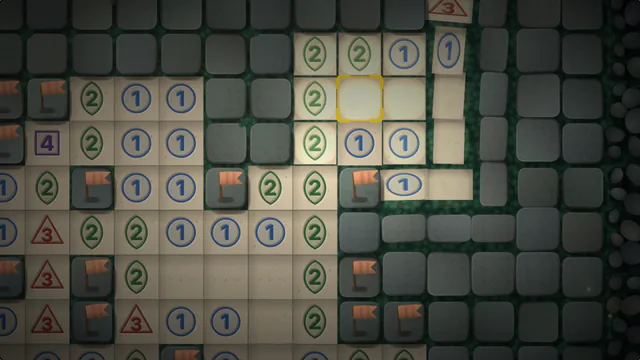 Minesweeper Clear the board without clicking a mine — use the numbers as clues. Pro game
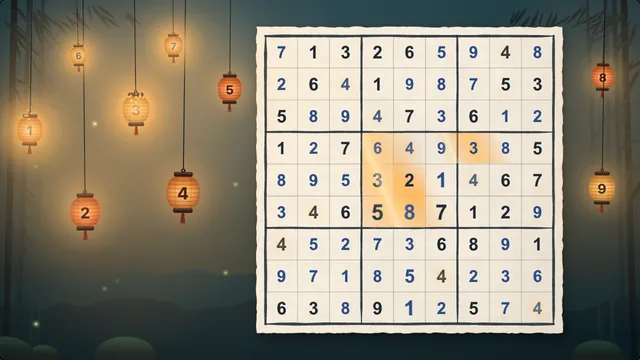 Sudoku A handmade grid under nine paper lanterns. Fill every row, column and box with 1 to 9. Pro game
 Merge Numbers Slide, merge matching gems and chase the highest stone you can make. Pro game
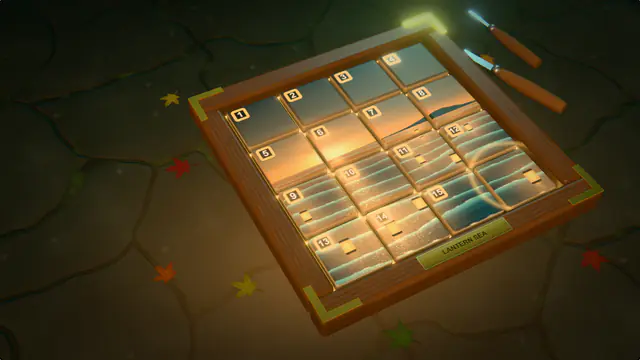 Sliding Puzzle Slide the carved tiles back into place and bring the painting to life. Pro game
 Prism Orchard: Chainburst Plan two swaps, release them together, and split the sunrise with a chain. Pro game