Tesseract Labyrinth: Rules in Motion
Hang the wheel. Press Surge. Then hang it again.
Pro game
Puzzle
Tesseract Labyrinth: Rules in Motion
Hang the wheel. Press Surge. Then hang it again.
This game could not load.
About Tesseract Labyrinth: Rules in Motion
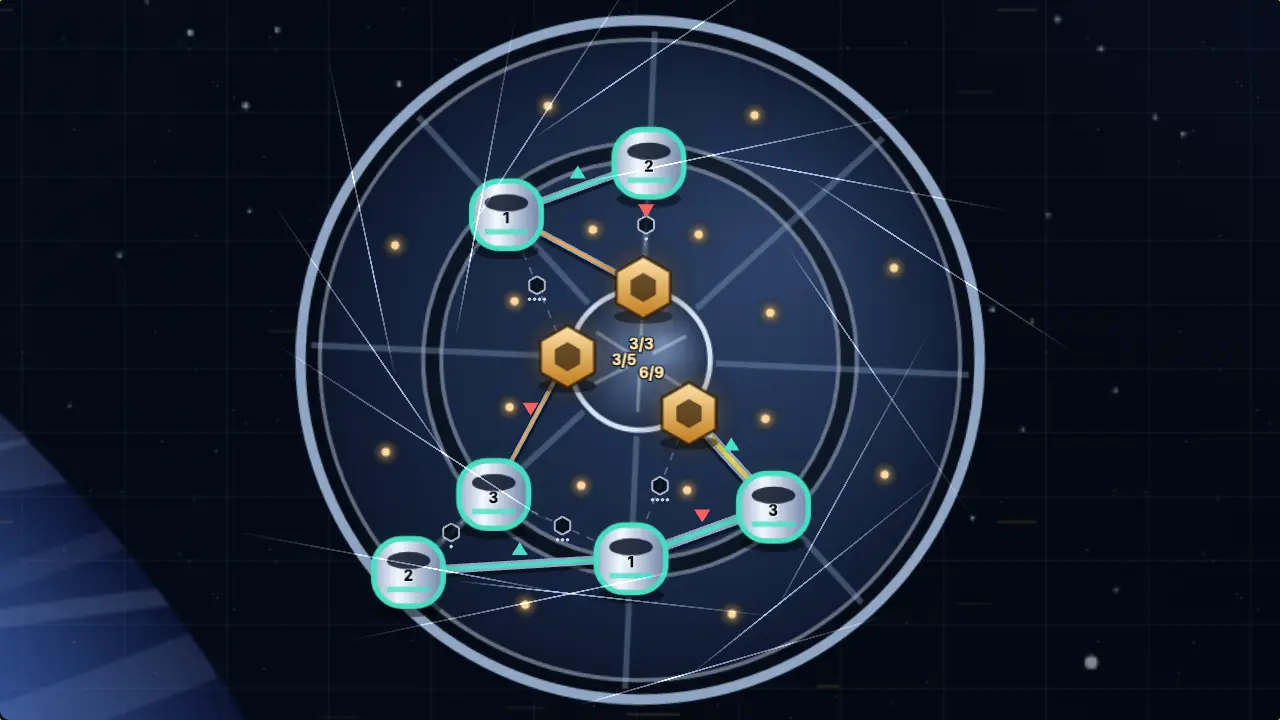
Tesseract Labyrinth: Rules in Motion is a structure puzzle on a gravity research station. The station is a wheel of rings and spokes. Hub bolts on the inner rim carry the whole weight, research modules sit on the two outer rings, and you hang struts between neighbouring pieces so that every module hangs from a bolt through exactly one chain of struts. A strut carries the mass of everything hanging beyond it, and every strut is fragile: it has a stress limit, and a bolt can bear only so much in all. A loop of struts is not allowed, and neither is a strut between two bolts.
The rules do not stand still. Every station has two phases. In the first the weights are as printed. When the wheel hangs soundly you press Surge, and one rule changes in the way the room announced beforehand: a bolt shears and the module it held has to be hung from elsewhere, the heavy sample moves from one module to another, the hub rebalances what each bolt can bear, or welds are reworked so some struts weaken and others gain strength. Then you re-hang the station with as few changes as you can.
The cost of a station is the struts you hung first plus every change you make after the surge, so a first hanging that is sound is not enough: the best one is the one that needs the fewest changes once the rule moves. Each station has a par the game's own solver worked out by trying every hanging before and after the surge.
When the station comes right the wheel settles: it spins up one full turn as the rule changes, streaks of starlight sweep around it, and a low chord holds as the struts glow. Twelve hand-built stations from a first bolt that shears to a wheel where every strut is close to its limit, then outer wheels seen from the far side and a daily station that is the same for everyone. Undo, redo and hints are always there, nothing is timed, and your progress stays in this browser.
How to play
- Hang every module from a hub bolt: tap a slot between two pieces to hang a strut, and again to take it down.
- A strut carries the mass of everything hanging beyond it. Keep each strut under its limit and each bolt under its own.
- No loops, and no strut between two bolts. When the wheel hangs soundly, press Surge.
- The surge changes one rule, as the room says beforehand. Re-hang with par moves and no hint for three stars.
Controls
- Tap or click a slot — hang a strut, tap again to take it down
- Arrow keys, WASD, D-pad or stick — move the cursor; Enter or Ⓐ — hang or take down
- Space, G, Ⓧ or Surge — surge; Z or Undo — undo; H or Hint — a hint; C or Clear — take every strut down
- P, Escape or Start — pause
Frequently asked questions
What changes when I press Surge?
Exactly one rule, and each station tells you which before you press. A bolt may shear and become a loose module, the heavy sample may move from one module to another, the hub may rebalance what each bolt can bear, or some welds may be reworked so that some struts weaken and others gain strength. The struts you have hung stay where they are.
How does a strut know what it carries?
Each bolt is the root of a tree of struts. A strut carries the total mass of every module on the far side of it from the bolt, so a strut next to a bolt carries the most. The number beside each strut shows what it carries against its limit, and a bolt shows what it bears against its own limit.
Why not simply build the final hanging at once?
Because the surge changes the rules in both directions: something that loosens somewhere tightens elsewhere. The first hanging has to be sound before you can press Surge, and the cost of a station counts the struts of the first hanging as well as every change after the surge. Looking ahead is what finds par.
How are stars and par worked out?
The game's own solver finds every sound hanging before the surge and every one after, and takes the pair with the fewest struts hung plus changes made: that is par. Par moves with no hint earn three stars, one more two, any station finished one. Using a hint caps a station at two stars.
Can I make it calmer or clearer?
Yes. The load numbers and the moving stars can be turned off, the surge speed has three settings, and the kit's own settings cover colour-blind palettes, reduced motion, fewer flashes, large text, sound and music.
Does the game save?
Yes, in this browser: stations finished, stars, and the station you were working on with its struts in place and the phase it was in. Nothing is uploaded.
Related games
All Puzzle games → Vector Labyrinth: Rules in Motion Dock it gently. Then the field shifts. Pro game
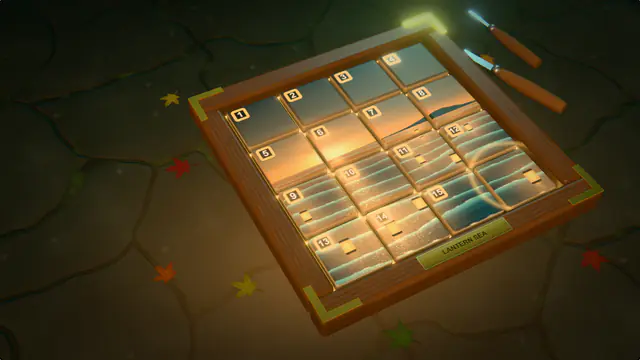 Sliding Puzzle Slide the carved tiles back into place and bring the painting to life. Pro game
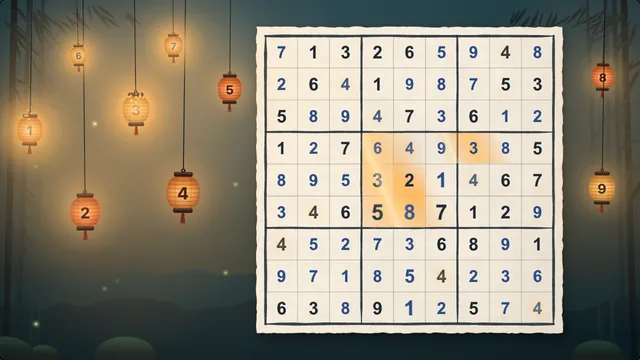 Sudoku A handmade grid under nine paper lanterns. Fill every row, column and box with 1 to 9. Pro game
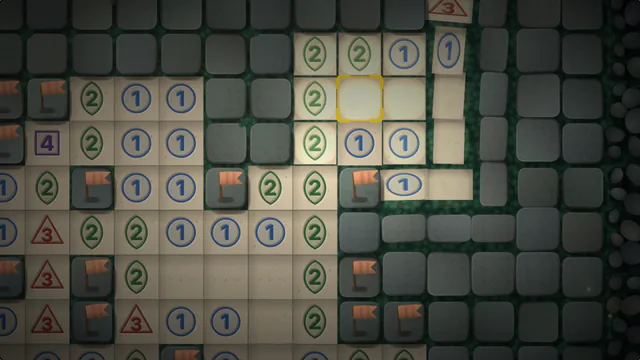 Minesweeper Clear the board without clicking a mine — use the numbers as clues. Pro game
 Merge Numbers Slide, merge matching gems and chase the highest stone you can make. Pro game
 Prism Orchard: Chainburst Plan two swaps, release them together, and split the sunrise with a chain. Pro game