Parallax Labyrinth: The Missing Axis
Tumble the cube. Read the floor. Reason about the faces you cannot see.
Pro game

The Missing Axis
Parallax Labyrinth: The Missing Axis
Tumble the cube. Read the floor. Reason about the faces you cannot see.
This game could not load.
About Parallax Labyrinth: The Missing Axis
Parallax Labyrinth: The Missing Axis is a cube-rolling puzzle set in the Museum of Inventions, closed for a century and lit tonight only by the moon. In every gallery stands the Wandering Engine, a brass cube engraved with six emblems: a gear, a lens, a bell, a key, a spring and a compass. It cannot walk. It tumbles, one tile at a time, over a floor of marble, brass rails and turntables, between glass cases full of telescopes, phonograph horns and filament bulbs. Bring it onto the velvet-roped plinth with the right emblem facing the right way, the bell on top or the key facing west, and the exhibit wakes.
Every tumble is a quarter turn about an axis. Rolling north or south turns the cube about the east-west axis, rolling east or west about the north-south axis, and on a turntable it can spin in place about the upright axis. The tile it stands on is the piece that decides what comes next: marble frees two axes, a rail only one, a turntable all three. Where you stop is the whole plan.
And one axis is missing. In each gallery the lamps of one axis are out, so the two faces of the cube that point along it are veiled: you know the emblems are there, but not which. You reason it out from the faces you can see, because opposite faces always pair up, gear with lens, bell with key, spring with compass. A lantern lets you peek for a moment when you are stuck. In the later galleries the missing axis is jammed as well and turns only on a turntable. Twelve hand-ordered galleries bring in one idea at a time, each with a par the game's own solver proved; then the east wing's endless storerooms and a daily gallery that is the same for everyone. Nothing is timed. Your progress stays in this browser.
How to play
- Bring the brass cube onto the plinth with the named emblem facing the named way.
- Tap a compass button, or the tile beside the cube, to tumble it one tile. On a turntable the spin buttons turn it in place.
- The tile under the cube decides the free axes: marble X and Y, a rail one of them, a turntable all three, shown on the buttons.
- One axis is dark: its two faces are veiled. Opposite faces pair up (gear and lens, bell and key, spring and compass). The lantern lights them for a moment.
- Par moves earn three stars. There is no clock.
Controls
- Tap or click a compass button, or the tile next to the cube — tumble it that way
- Arrow keys, WASD or D-pad — roll north, south, west, east; Q and E — spin on a turntable
- L — light the veiled faces for a moment; H — a hint
- Backspace, Z or Undo — undo; R or Reset — back to the start of the gallery
- P, Escape or Start — pause
Frequently asked questions
How does the cube move?
It tumbles over an edge onto the next tile, a quarter turn each time: rolling north or south turns it about the east-west axis (X), rolling east or west about the north-south axis (Y). On a turntable it can also spin in place about the upright axis (Z) without leaving the tile.
What do the floor pieces do?
The tile the cube stands on frees some axes for the next move. Marble frees X and Y, so the cube can roll any way. A brass rail frees only the axis along it, so the cube can roll only along the rail. A turntable frees all three. Display cases cannot be entered.
What is the missing axis?
In each gallery the lamps of one axis are out. The two faces of the cube that point along that axis are veiled, so you see a dark panel instead of an emblem. You can still work them out: opposite faces always pair up, gear with lens, bell with key and spring with compass. In the later galleries that axis is also jammed and turns only on a turntable.
Is it fair to peek?
Yes. The lantern lights the veiled faces for a moment and costs nothing; one badge asks you to solve a gallery without it. A hint shows the next move of a shortest answer and limits that solve to two stars.
Can I play without telling the colours apart?
Yes. Every emblem has its own shape, veiled faces show a question mark, rails have grooves, turntables an arrow and the plinth its rope posts. Every move is also described in words for screen readers.
Does the game save?
Yes, in this browser: solved galleries, stars, and the gallery you were working on with your moves in place. Nothing is uploaded.
Related games
All Puzzle games →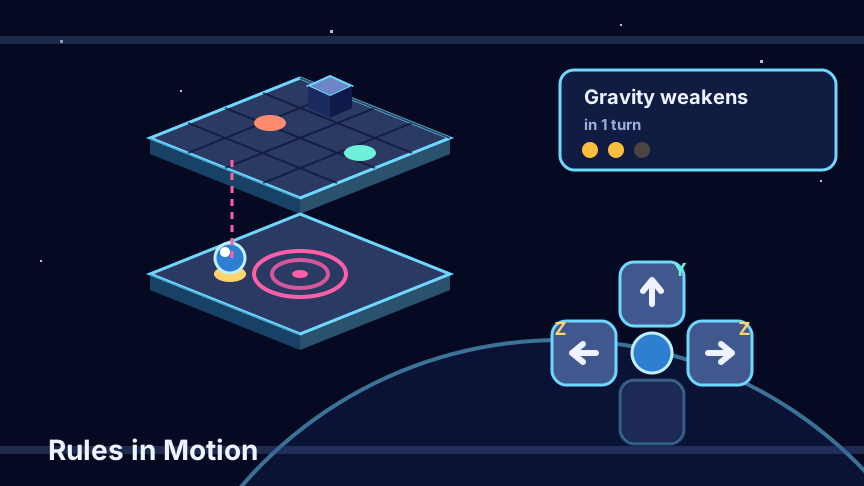 Parallax Labyrinth: Rules in Motion Turn gravity. Slide the ball. Then the rules change. Pro game
 Parallax Workshop: The Missing Axis Match the shadows. One axis is always tied. Pro game
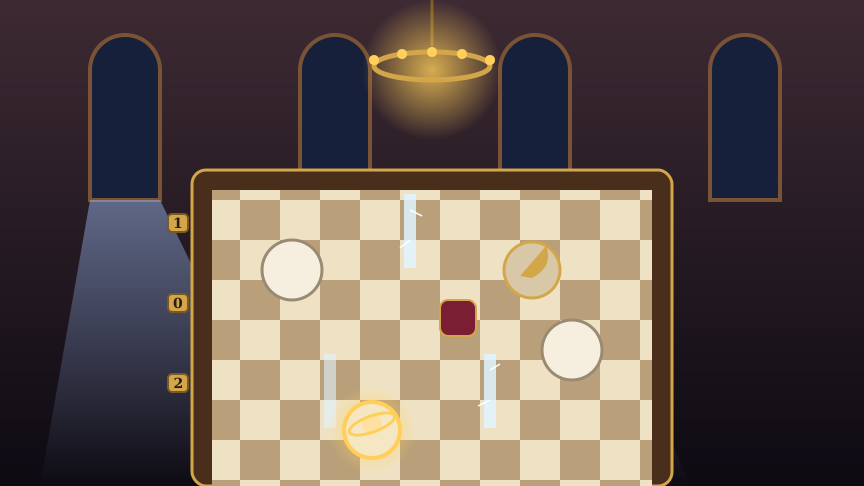 Kinetic Labyrinth: The Missing Axis Tilt the hall. Find the glass you cannot see. Pro game
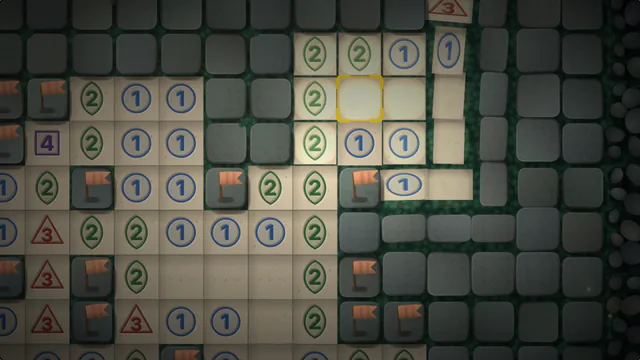 Minesweeper Clear the board without clicking a mine — use the numbers as clues. Pro game
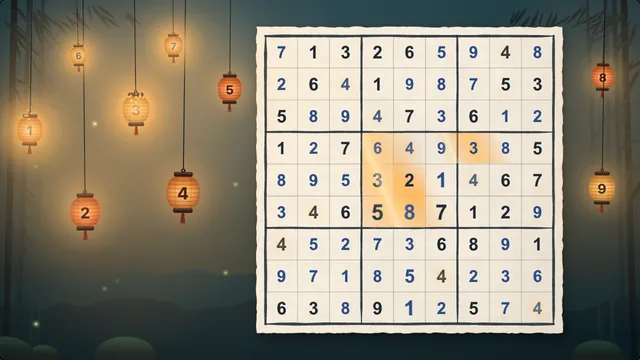 Sudoku A handmade grid under nine paper lanterns. Fill every row, column and box with 1 to 9. Pro game
 Merge Numbers Slide, merge matching gems and chase the highest stone you can make. Pro game