Kinetic Labyrinth: The Missing Axis
Tilt the hall. Find the glass you cannot see.
Pro game
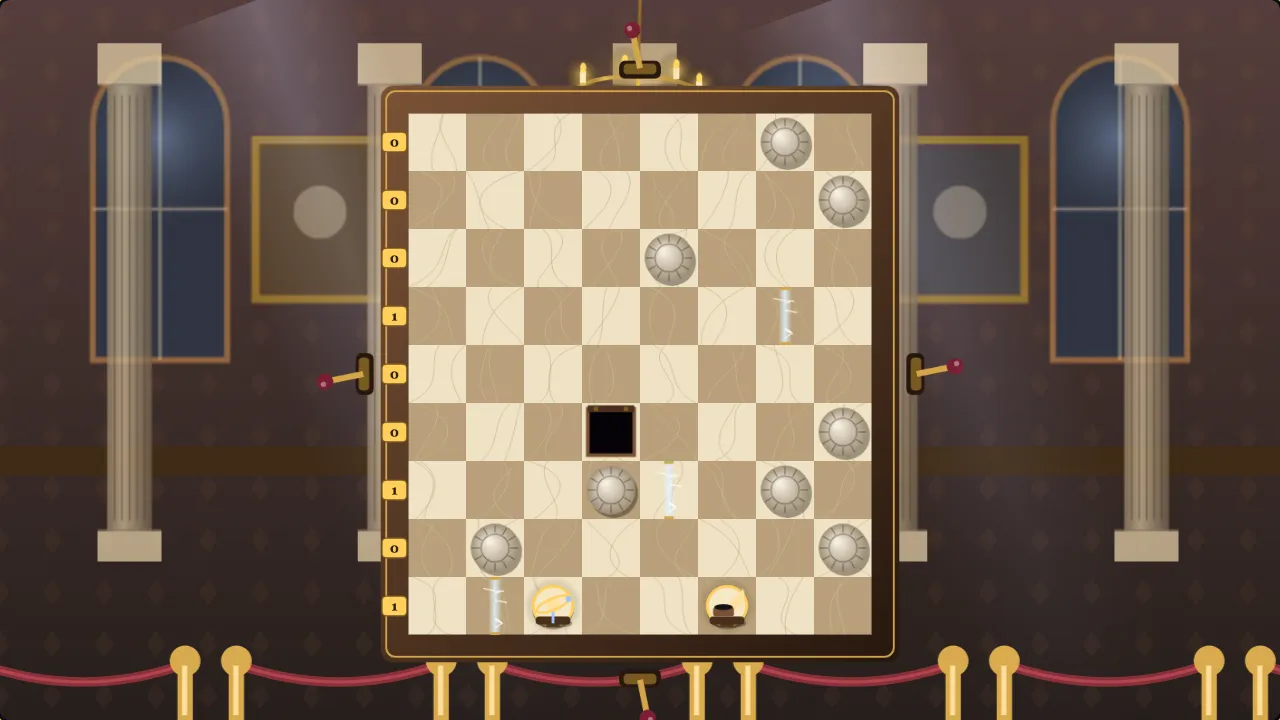
Museum of inventions · hidden-glass gravity puzzle
Kinetic Labyrinth: The Missing Axis
Tilt the hall. Find the glass you cannot see.
This game could not load.
About Kinetic Labyrinth: The Missing Axis
Kinetic Labyrinth: The Missing Axis is a gravity puzzle set in the Museum of Inventions, closed for a century and still standing on its hydraulic floors. In each hall an orrery, a gramophone, a clockwork bird or a filament lamp has slid off its plinth onto the marble. You never carry an exhibit: you pull one of four brass floor levers and the whole hall tilts, and every exhibit slides until a marble pillar, another exhibit or a velvet mat stops it. Trapdoors to the cellar swallow whatever slides into them.
The missing axis is the glass. Every hall still hides its old display-case panes, and you cannot see them. They all stand along one axis, given on the hall card: when the glass runs north to south it stops exhibits sliding east or west and lets them slide north or south straight through, and the other way round. Brass tags on the hall frame count the hidden panes in each row or column. A pane only shows itself when an exhibit bumps into it, with the ring of a struck wineglass and a bloom of frost. Work out where the glass must be from the counts and the bumps, and find every pane of a hall to light its chandelier.
Twelve halls teach the two grains of glass, then add trapdoors, mats and more exhibits, each with a par from the game’s own solver. After them come the endless rooms of the closed annex and a hall of the day that is the same for every visitor. Glass you have found stays found through undo and reset, hints are always there, nothing is timed, and your progress stays in this browser.
How to play
- Stand every exhibit on a plinth. You never carry one: you tilt the whole hall.
- Press an arrow key, swipe, or tap a floor lever. Every exhibit slides until a pillar, another exhibit or a velvet mat stops it.
- Each hall hides glass panes along one axis. They stop slides across their grain and let slides along it pass straight through.
- Brass tags count the hidden panes in each row or column. A pane shows itself when an exhibit bumps into it.
- Finish in par tilts with no hint for three stars. Panes you never had to bump add acquisitions.
Controls
- Arrow keys, WASD, D-pad or stick — tilt the hall; or swipe, or tap a floor lever
- Z or Undo — undo a tilt; R or Reset — reset the hall; H or Hint — a hint
- C — hear the hall card again
- P, Escape or Start — pause
Frequently asked questions
How do I move an exhibit?
You do not. You pull one of four floor levers (an arrow key, a swipe or a tap) and the whole hall tilts, so every exhibit slides that way until a pillar, another exhibit or a velvet mat stops it. Stand an exhibit on every plinth to finish the hall.
What is the hidden glass?
Each hall hides display-case panes you cannot see. They all stand along one axis, shown on the hall card. Glass that runs north to south stops exhibits sliding east or west but lets them pass north or south; glass that runs east to west does the opposite.
How do I find a pane?
The brass tags on the frame count the panes in each row or column. A pane shows itself, with a ring and a bloom of frost, as soon as an exhibit is stopped by it. Glass you have found stays found through undo and reset.
How are stars and par worked out?
The game’s own solver knows where the glass stands and finds the fewest tilts that fill every plinth: that is par. Par tilts with no hint earn three stars, one more earns two, any finished hall one; a hinted hall earns at most two. Panes you never had to bump add acquisitions.
Can I calm the effects down?
Yes. Found glass can be drawn with bold outlines, the drifting moonlight dust can be turned off, and the kit’s own settings cover reduced motion, fewer flashes, large text, sound and music.
Does the game save?
Yes, in this browser: finished halls, stars, the glass you have found and the hall you were working on, with your tilts replayed. Nothing is uploaded.
Related games
All Puzzle games → Minesweeper Clear the board without clicking a mine — use the numbers as clues. Pro game
 Sliding Puzzle Slide the carved tiles back into place and bring the painting to life. Pro game
 Sudoku A handmade grid under nine paper lanterns. Fill every row, column and box with 1 to 9. Pro game
 Merge Numbers Slide, merge matching gems and chase the highest stone you can make. Pro game
 Prism Orchard: Chainburst Plan two swaps, release them together, and split the sunrise with a chain. Pro game
 Prism Mosaic: Chainburst Plan two swaps, release them together, and send a lantern over the night market. Pro game