Parallax Labyrinth: Rules in Motion
Turn gravity. Slide the ball. Then the rules change.
Pro game
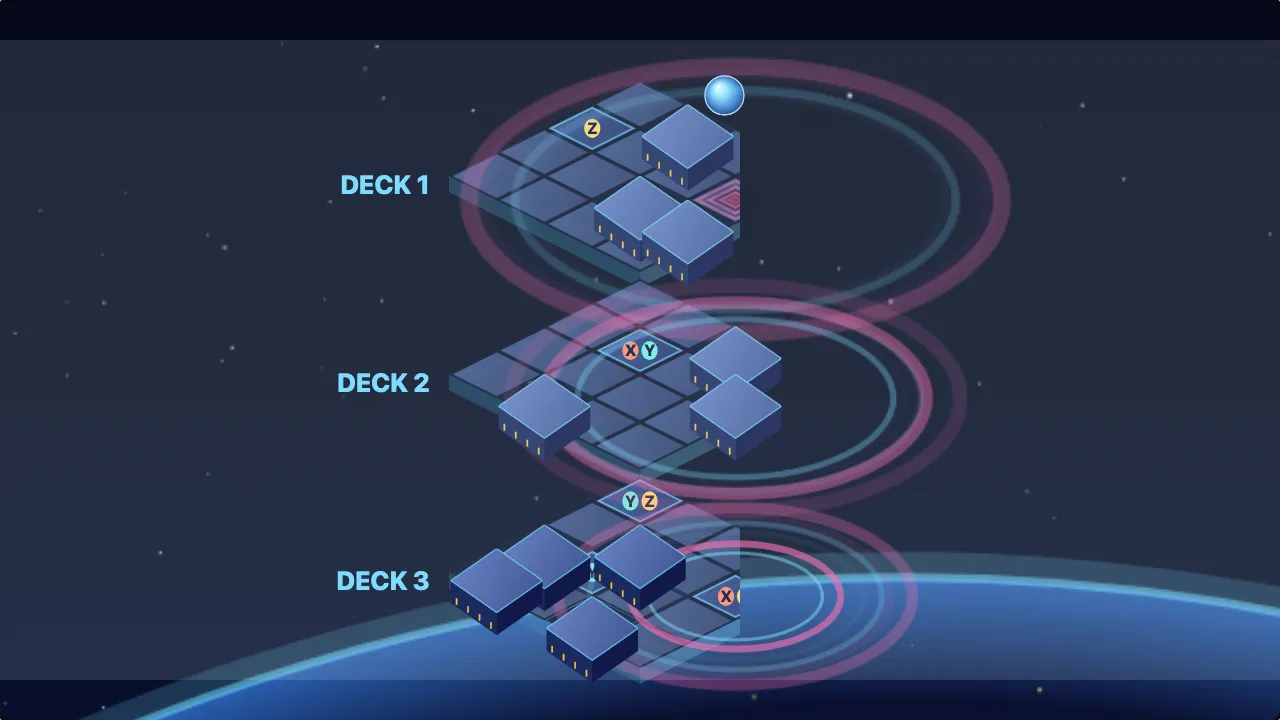
Rules in Motion
Parallax Labyrinth: Rules in Motion
Turn gravity. Slide the ball. Then the rules change.
This game could not load.
About Parallax Labyrinth: Rules in Motion
Parallax Labyrinth: Rules in Motion is a gravity maze set in a research station built as a tall shaft. Two or three glass decks float one above another over a night-side planet, each a small grid of steel tiles, wall blocks and coloured pads. A glass ball lies on one tile, and your only tool is gravity: turn it to point north, south, west, east, up a deck or down a deck, and the ball slides that way until a wall or the edge of the station stops it. Come to rest on the glowing magenta goal and the room is done.
Gravity does not turn freely. Every quarter turn is about an axis: from north to east is a turn about the vertical axis, from north to down a deck a turn about the east-west axis, and so on. Only the axes that are lit can be used. Each pad the ball comes to rest on sets which axes are lit, one, two or all three, and bare floor keeps the ones you had, so where you stop decides what you can do next. A slide that passes over a pad does not touch it.
Then the rules move. Partway through each puzzle, after the number of turns shown on the rule card, one thing changes: gravity weakens and carries the ball only two cells, or every pad starts to catch the ball as it passes, or one axis seizes and no pad can turn gravity about it any more. The route that worked before the change stops working, so the plan has to adapt. Twelve hand-ordered stations bring in one kind of change at a time, each with a par the game's own solver proved; then endless deep stations and a daily station that is the same for everyone. Nothing is timed. Your progress stays in this browser.
How to play
- Bring the glass ball to rest on the magenta goal.
- Tap a direction button to turn gravity that way. The ball slides until a wall or the edge stops it. Gravity can also point up or down a deck.
- A turn needs an axis, shown on the button. Only lit axes work; the pad the ball last rested on sets which axes are lit.
- Watch the rule card: after the marked turn gravity weakens, the pads catch the ball, or an axis seizes. Adapt your route.
- Par turns earn three stars. There is no clock.
Controls
- Tap or click a direction button — turn gravity that way
- Arrow keys, WASD or D-pad — north, south, west, east; Q and E — up and down a deck
- Backspace, Z or Undo — undo; R or Reset — back to the start of the station; H — a hint
- P, Escape or Start — pause
Frequently asked questions
How does a turn work?
Gravity points one of six ways. A turn swings it a quarter, to one of the four directions at right angles to it, about the axis between them. Turning it all the way round (a half turn) is not allowed. After each turn the ball slides until a wall or the edge of the station stops it.
What do the pads do?
A pad lights some of the axes X, Y and Z, shown by its letters and coloured dots. When the ball comes to rest on a pad, exactly those axes are lit for the next turn. Resting on bare floor keeps the axes you already had. Passing over a pad without stopping changes nothing.
What changes partway through a puzzle?
One of three things, announced on the rule card before it happens: gravity weakens (the ball slides at most two cells), the pads catch (the ball stops on any pad it passes), or one axis seizes (no pad can turn gravity about it any more). It happens after the turn marked on the card.
Is anything timed or scored against me?
Nothing is timed. Stars compare your turns with par, the fewest the solver found, and a solve after a hint earns at most two. Undo and Reset are free.
Can I play without telling the colours apart?
Yes. Every pad shows its axis letters, the goal has three rings, walls stand up from the deck, and each direction button names the axis it needs.
Does the game save?
Yes, in this browser: solved stations, stars, and the station you were working on with your turns in place. Nothing is uploaded.
Related games
All Puzzle games →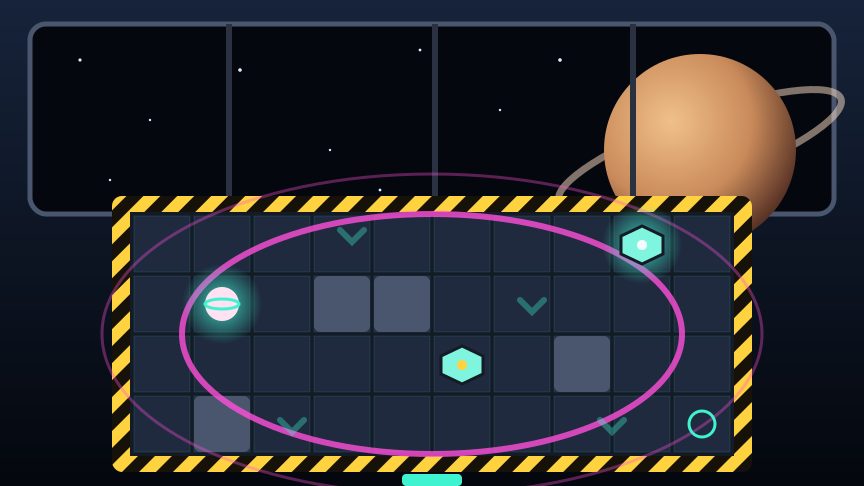 Kinetic Labyrinth: Rules in Motion Swing the field. Survive the shift change. Pro game
 Vector Labyrinth: Rules in Motion Dock it gently. Then the field shifts. Pro game
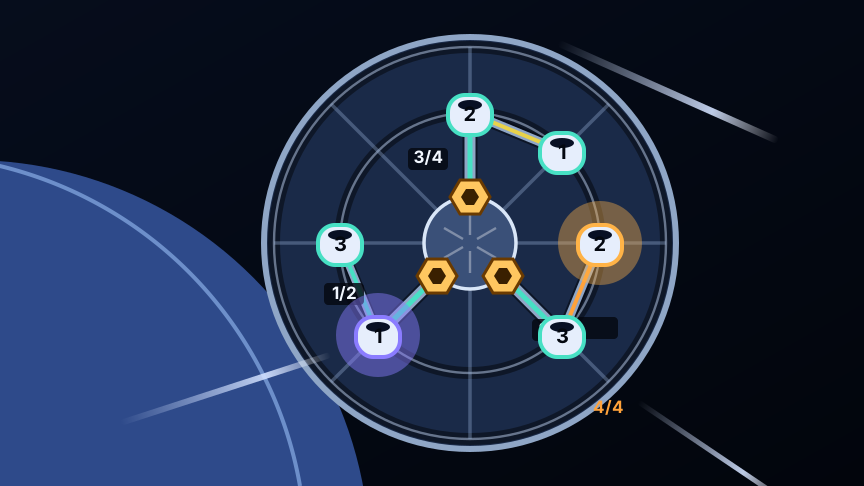 Tesseract Labyrinth: Rules in Motion Hang the wheel. Press Surge. Then hang it again. Pro game
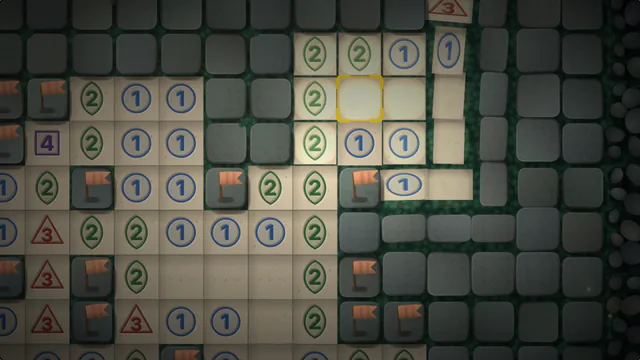 Minesweeper Clear the board without clicking a mine — use the numbers as clues. Pro game
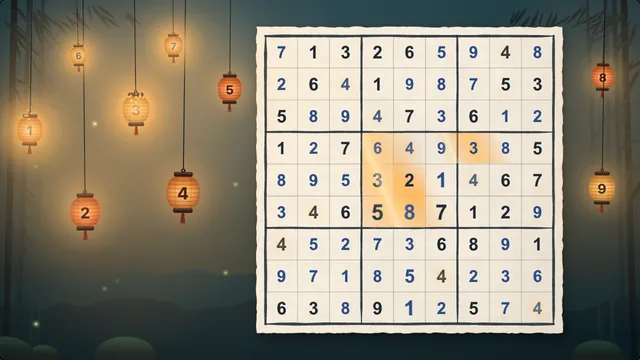 Sudoku A handmade grid under nine paper lanterns. Fill every row, column and box with 1 to 9. Pro game
 Merge Numbers Slide, merge matching gems and chase the highest stone you can make. Pro game