Kinetic Workshop: Quiet Machines
Write the program. Then watch the machine run.
Pro game
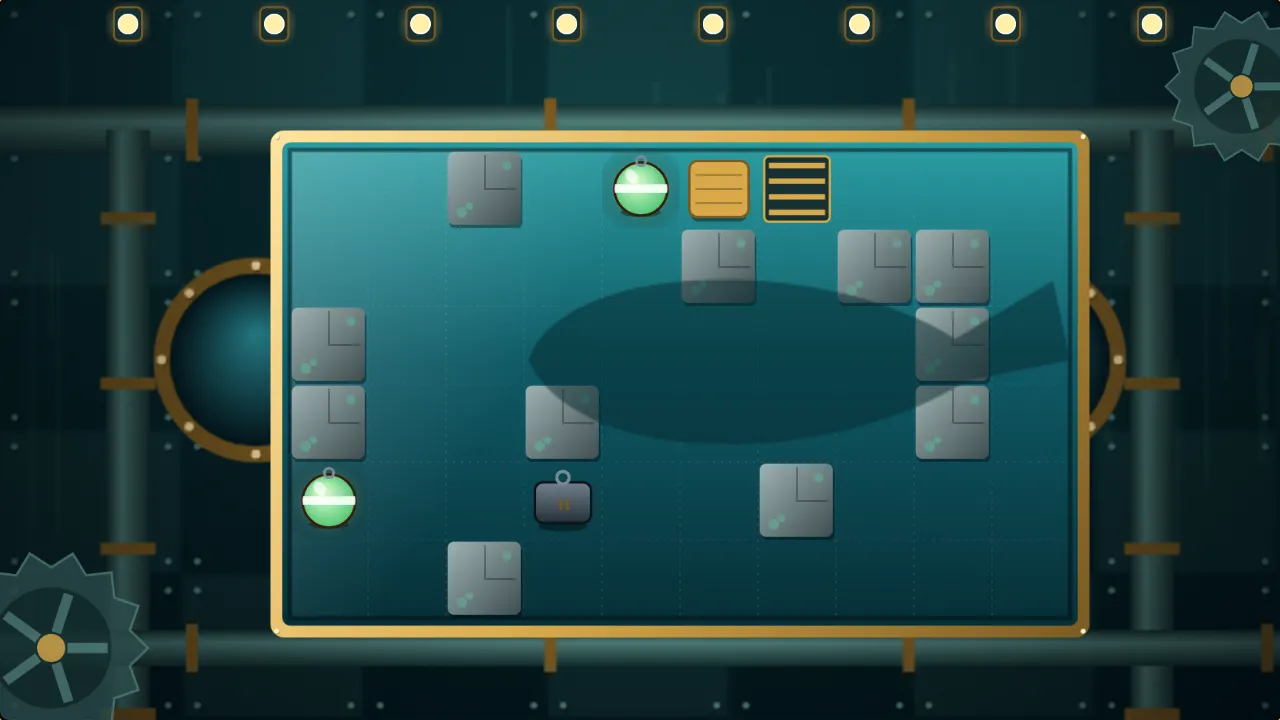
Underwater hall · gravity puzzle
Kinetic Workshop: Quiet Machines
Write the program. Then watch the machine run.
This game could not load.
About Kinetic Workshop: Quiet Machines
Kinetic Workshop: Quiet Machines is a calm gravity puzzle in a silent underwater machine hall. A sealed glass tank in a brass frame holds orange buoys and iron weights in still water, with hook sockets cut into the floor. You do not play it live. You write a program: four brass valve wheels add a tilt card to a conveyor, up, right, down or left, and when you press Run the machine works through the cards from the start while you watch. Floats slide until a wall, another float or a barnacle stops them. Seat a float in every socket and the machine hums.
There is no clock and nothing to lose. A wrong program costs nothing: change a card, take one off, or clear the conveyor and run it again. Each card lights as the machine takes it, and after a run a card that moved nothing turns grey so you can see where the plan went wrong. The tanks add a machine of their own: a heavy weight resting on a brass pressure plate holds a barred valve open, and a grated vent swallows any float that slides into it, so the program has to park the weight first and keep the floats out of the vents.
Seven hand-ordered tanks go from two floats and a handful of cards to three floats, a weight, a vent, a barnacle and a valve, each with a par the game's own solver worked out. Beyond them are endless deep halls and a daily tank that is the same for everyone. When the last socket is filled the hall hums: the pump lamps along the ceiling light one after another, the gears spin up, caustic light brightens on the water and a whale passes the glass. Hints are always there, and your progress stays in this browser.
How to play
- Seat a float in every hook socket. You write a program of tilts, then run it.
- Tap a valve wheel or press an arrow key to add a tilt card: up, right, down or left. Floats slide until a wall, another float or a barnacle stops them.
- Press Run. The machine works through every card from the start while you watch. A wrong program costs nothing.
- A weight on the brass plate holds the valve open. A float that slides into a vent is lost. Tap a card to take it off.
- Solve a tank in par cards with no hint for three stars. Floats seated and a first-run bonus add pressure.
Controls
- Tap a valve wheel, or arrow keys, WASD, D-pad or stick — add a tilt card
- Space, Enter, Ⓧ or Run — run the machine; Backspace or Back — take the last card off; Delete — clear
- Z or U — undo an edit; H or Hint — a hint; B — hear the tank described again
- P, Escape or Start — pause
Frequently asked questions
How is this different from tilting live?
Here you write the whole program first, a row of tilt cards on a conveyor, and then run it from the start while you watch. Nothing is timed and you cannot make a move you did not plan. If it goes wrong, change a card and run it again.
What do the cards mean?
Each card is one tilt of the tank: up, right, down or left. Floats slide that way until a wall, another float or a barnacle stops them. After a run, a card that moved nothing turns grey, and in a solved program the cards that were used turn green.
What do the weight, the plate and the valve do?
A weight is a heavy iron puck that slides like a float but fills no socket. When it rests on the brass plate, the barred valve opens and floats can pass; when it moves off, the valve shuts again. A grated vent swallows any float or weight that slides into it.
How are stars and par worked out?
The game's own solver finds the shortest program that seats every float: that is par. Par cards with no hint earn three stars, one or two more earn two, any solved tank one; a tank solved after a hint earns at most two.
Can I calm the effects down?
Yes, and it is already a quiet game. Run speed has three settings, the bubbles can be turned off, and the kit's own settings cover reduced motion, fewer flashes, large text, sound and music.
Does the game save?
Yes, in this browser: solved tanks, stars and the program on the conveyor of the tank you were working on. Nothing is uploaded.
Related games
All Puzzle games →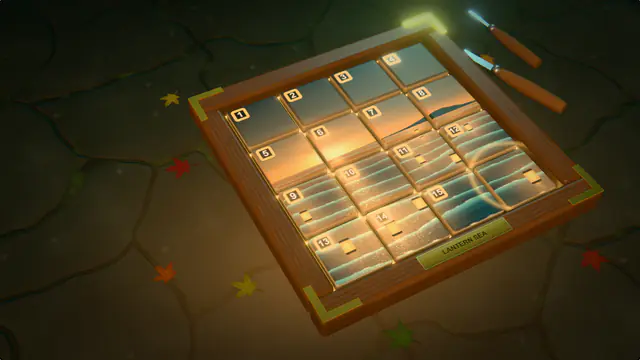 Sliding Puzzle Slide the carved tiles back into place and bring the painting to life. Pro game
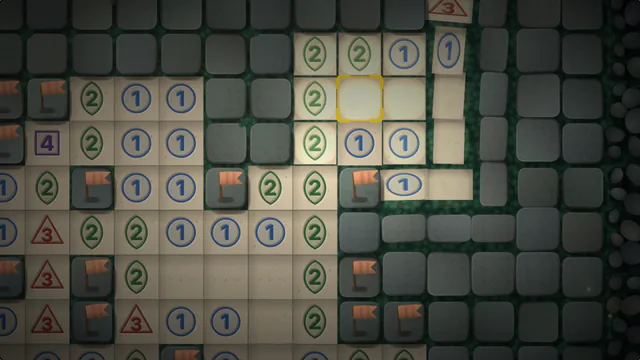 Minesweeper Clear the board without clicking a mine — use the numbers as clues. Pro game
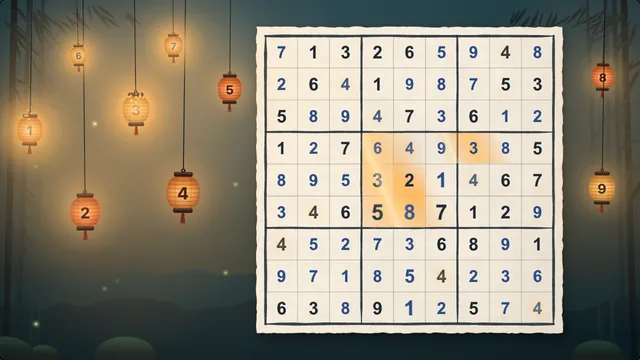 Sudoku A handmade grid under nine paper lanterns. Fill every row, column and box with 1 to 9. Pro game
 Merge Numbers Slide, merge matching gems and chase the highest stone you can make. Pro game
 Prism Orchard: Chainburst Plan two swaps, release them together, and split the sunrise with a chain. Pro game
 Prism Mosaic: Chainburst Plan two swaps, release them together, and send a lantern over the night market. Pro game