Kinetic Pendulum: Quiet Machines
Write the program. Then watch the gantry work.
Pro game
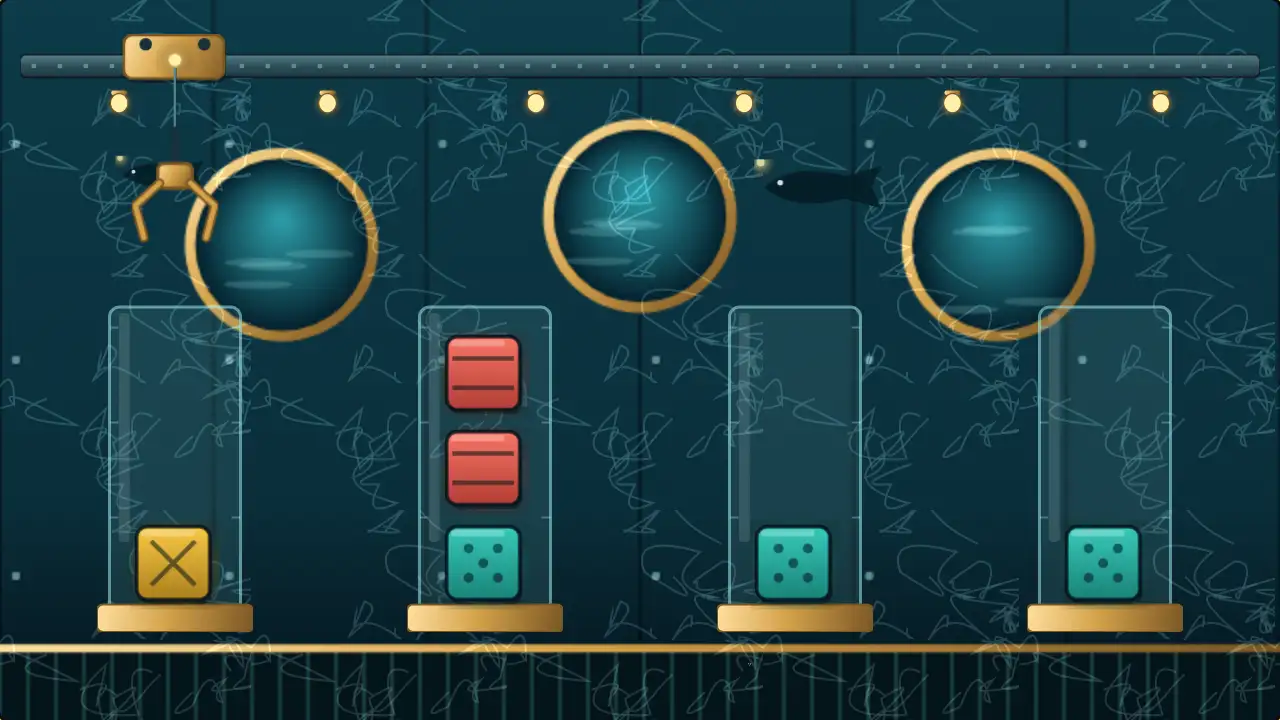
Underwater hall · programming puzzle
Kinetic Pendulum: Quiet Machines
Write the program. Then watch the gantry work.
This game could not load.
About Kinetic Pendulum: Quiet Machines
Kinetic Pendulum: Quiet Machines is a calm programming puzzle in a silent underwater machine hall, seen from the side. A gantry crane runs on a steel rail over a row of glass bays, and each bay holds a stack of crates in coral, teal and gold, each colour with its own pattern on the lid. A blueprint pinned beside the hall shows how the stacks should look when the work is done. You never steer the crane. You fill a strip of brass portholes with cards: move left, move right, and work, which takes the top crate of the bay below or, if the grabber is full, sets it down on the stack. Then you press Run and watch.
The halls get longer than the strip, and that is where the routine comes in. A second, shorter strip holds a routine, and a call card in the main program runs the whole routine in one card. Write a three-card routine once and call it three times, and a long job fits on a short strip. The game's own solver counts every card, main and routine together, and finds the fewest that match the blueprint: that is par. In the halls with a routine it also checks that no main strip of that length can do the job without one.
There is no clock and nothing to lose. A wrong program costs nothing: take a card off, swap one, or clear the strips and run it again, and every porthole shows afterwards which cards did something. Twelve hand-made halls go from three crates and a short rail to five bays and a routine that must be called again and again. Beyond them are deep halls, the same halls seen from the other side of the glass, and a daily hall that is the same for everyone. When the blueprint is matched the cargo sings: the crates ring one after another, bay by bay, lanterns glow and a school of lantern fish passes the windows. Hints are always there, and your progress stays in this browser.
How to play
- Make the stacks match the blueprint, with nothing left in the grabber. You write a program, then press Run and watch.
- Tap a brass button (or press the left and right arrows, Up or E to work, Down or R to call) to add a card to the strip whose frame glows: move left, move right, work, or call the routine.
- Work takes the top crate of the bay below, or sets the crate you hold on the stack if there is room. A bay holds only so many crates.
- Tap the routine strip (or press F) to write a short routine, then use the call card in the main strip to run it.
- Solve a hall in par cards, main and routine together, with no hint for three stars. A wrong program costs nothing.
Controls
- Tap a brass button, or the left and right arrows, A and D, D-pad — move; Up, W, E or Ⓐ — work; Down, S or R — call the routine
- F or a tap on a strip — choose the main program or the routine; Space, Enter, Ⓧ or Run — run; Backspace or Back — take the last card off; Delete or C — clear
- Z or U — undo an edit; Y — redo; H or Hint — a hint; B — hear the hall described again
- P, Escape or Start — pause
Frequently asked questions
How is this different from steering a crane?
You never steer it. You write the whole program first, a strip of cards, and then run it from the start while you watch. Nothing is timed and a wrong program costs nothing: change a card and run it again.
What does the work card do?
With an empty grabber it takes the top crate of the bay below. With a crate in the grabber it sets that crate down on the stack, if the bay has room. If there is nothing to take or no room, the card is spent and nothing happens.
What is the routine?
A second, shorter strip of cards. A call card in the main strip runs the whole routine at once, so a sequence you need several times costs its cards only once. A routine cannot call itself.
How are stars and par worked out?
The game's own solver finds the fewest cards, main and routine together, that match the blueprint with an empty grabber: that is par. Par cards with no hint earn three stars, one more earns two, any solved hall one; a hall solved after a hint earns at most two.
Why are the crates marked as well as coloured?
Coral crates have stripes, teal crates have rivets and gold crates have a cross, so the colours never carry the puzzle alone. The blueprint uses the same marks.
Does the game save?
Yes, in this browser: solved halls, stars and the two strips of the hall you were working on. Nothing is uploaded.
Related games
All Puzzle games →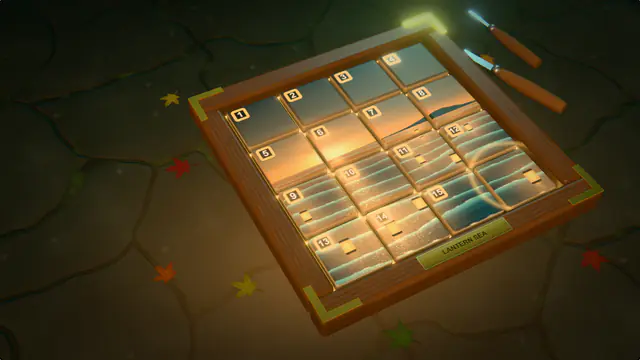 Sliding Puzzle Slide the carved tiles back into place and bring the painting to life. Pro game
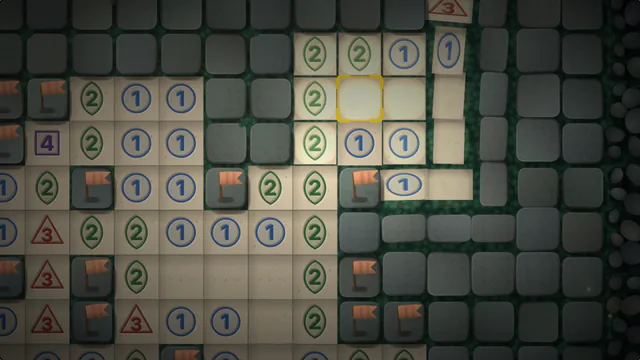 Minesweeper Clear the board without clicking a mine — use the numbers as clues. Pro game
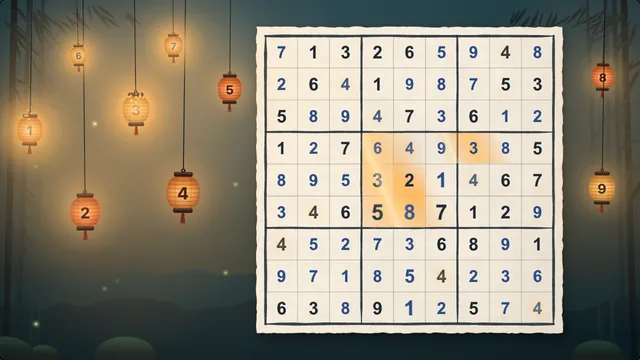 Sudoku A handmade grid under nine paper lanterns. Fill every row, column and box with 1 to 9. Pro game
 Merge Numbers Slide, merge matching gems and chase the highest stone you can make. Pro game
 Prism Orchard: Chainburst Plan two swaps, release them together, and split the sunrise with a chain. Pro game
 Prism Mosaic: Chainburst Plan two swaps, release them together, and send a lantern over the night market. Pro game