Runebound Hand: Tactics Engine
Flood, then ebb. Or turn the tide.
Premium game

A moving archipelago
Runebound Hand: Tactics Engine
Flood, then ebb. Or turn the tide.
This game could not load.
About Runebound Hand: Tactics Engine
Runebound Hand: Tactics Engine is a solo deckbuilder about charting an archipelago that will not hold still. Its islands are rafts of black rock and palms that drift on the current, the channels between them open and close with the tide, and the creatures that live there do not care for maps. You are the expedition's navigator, with a harpoon, a tide-inked hand, a ten-card deck and eight channels to cross to the Island That Walks.
Every fight is played on a line of five islands. You hold the anchor rock on the left; the creatures come down the channel from the far end, the last of them with the open current at its back, and each shows its next move. Distance matters on both sides. Your oar reaches only the island beside you, a harpoon three islands out, a waterspout all the way. A creature whose attack cannot reach you rows one island closer instead, so pushing the dangerous ones away buys you a turn. Push a creature past the last island and the open current takes it: a great curling wave rises, carries it off and sets it back on the reef six the worse for it.
Every card is a flood card or an ebb card, and the order you play them in changes what they do. With the tide, the first card of a turn or one of the other tide than the last, a card does its first effect. Against the tide, straight after a card of the same tide, it does its second, which is never just a weaker copy: an Oar Strike that would shove a foe away hits harder and stays put, a Bail Out that would cover you hauls every foe a step closer, a Riptide that drags one in turns into a blow that leaves it weak. Each card says which way it will go before you play it, and the sea itself rises with every flood and falls with every ebb.
Between fights you take a card or a find, rest in a lagoon, or make landfall on a drifting island and decide what it is worth. Each expedition is a fresh archipelago from a seed, and the daily challenge gives everyone the same one. The game saves where you leave it, in this browser only.
How to play
- Pick a channel on the map. Each fight is played on a line of five islands: you hold the anchor rock on the left, the creatures come down the channel from the far end, and each shows its next move above its head.
- A card that strikes one foe has a reach, shown in its corner: it hits only a foe that many islands away or nearer. A creature has a reach too; if its attack cannot reach you, it rows one island closer instead.
- Cards push foes away down the channel or haul them in. A foe pushed past the last island is caught by the open current and takes 6.
- Every card is flood or ebb. Played with the tide, the first card of a turn or a card of the other tide than the last, it does its first effect. Played against the tide, right after a card of the same tide, it does its second: a shove becomes a blow, a haul becomes a shield.
- You have three strokes a turn. Between fights take a card or a find, rest in a lagoon, or make landfall. Beat the Island That Walks at the end of the chart.
Controls
- Play a card — Tap it, or press its number 1 to 9; then tap a foe, or press its number, when a target is asked for
- Let the islands drift (end your turn) — The button, E, Ⓧ
- Cancel a card you picked — Escape, Ⓑ
- Choose a channel, a reward or an option — Tap it, or press 1 to 9; S skips a reward
- Move between buttons — Arrow keys, Tab, D-pad; Space or Enter or Ⓐ presses
- Pause — P, Escape or Start
Frequently asked questions
What is reach?
How many islands away a card or a creature can hit. Reach 1 is the island beside you. A card with no foe within its reach is dimmed and says why; a creature with nobody in reach rows closer instead of attacking.
When does a card go against the tide?
When the card you played just before it this turn was of the same tide: two floods or two ebbs in a row. The first card of every turn goes with the tide. Each card's words change to show which way it will go.
Is against the tide worse?
Not always. Every card has a second effect of its own, and some turns want it: an Oar Strike against the tide hits for 9 instead of 6 and a push, a Cutlass strikes twice, a Waterspout hits for 16.
What does the open current do?
A foe pushed past the fourth island is caught by it and takes 6, no matter its block, and is set back on the last island. Push a creature that is already there and the current takes it again.
Does it save my run?
Yes, in this browser only: the map, your deck, your finds and the fight you are in, where every creature stands and the tide of your last card included. Your unfinished run, best score and badges are never uploaded.
Related games
All Cards games → Klondike Solitaire The classic one-player card game — build all four suits up to the King. Pro game
 FreeCell Every FreeCell deal is winnable with the right moves — all 52 cards start face up. Pro game
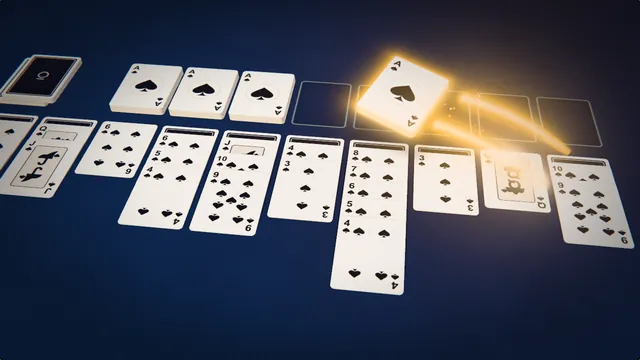 Spider Solitaire Build full King-to-Ace runs across ten columns to clear the board. Pro game
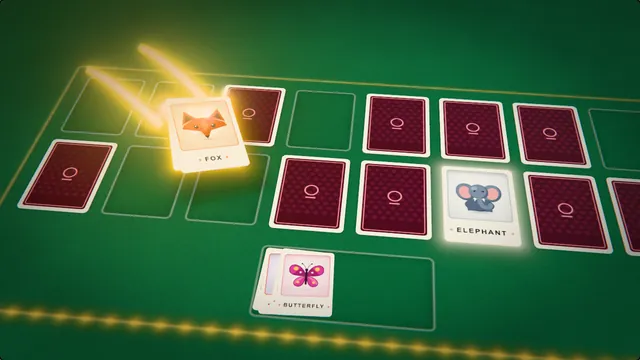 Memory Match Flip two cards at a time and find every matching pair. Pro game
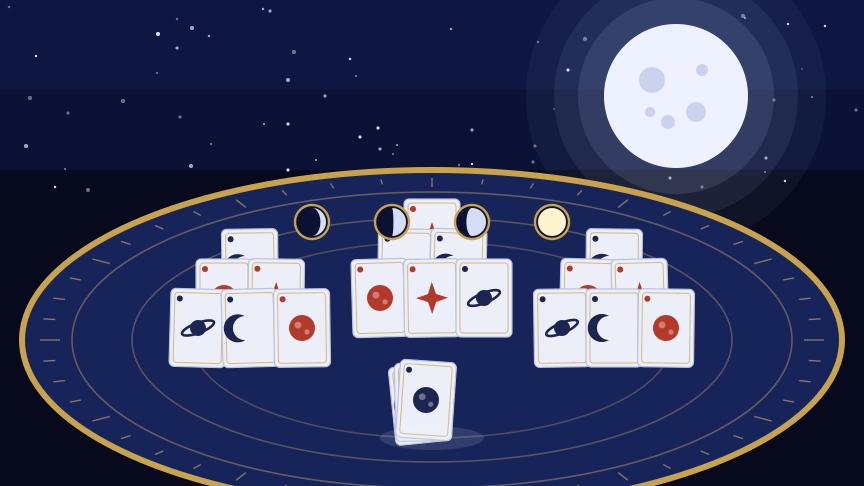 Moonlit Deck: Last Draw Three peaks, one moon dial and a draw pile that is running out. Pro game
 Moonlit Deck: Suit Garden Four beds, five lanes and a wagon full of seeds. Pro game