Moonlit Observatory: Fortune Lane
Five deals, two rule cards each time, one row of pocket watches.
Pro game
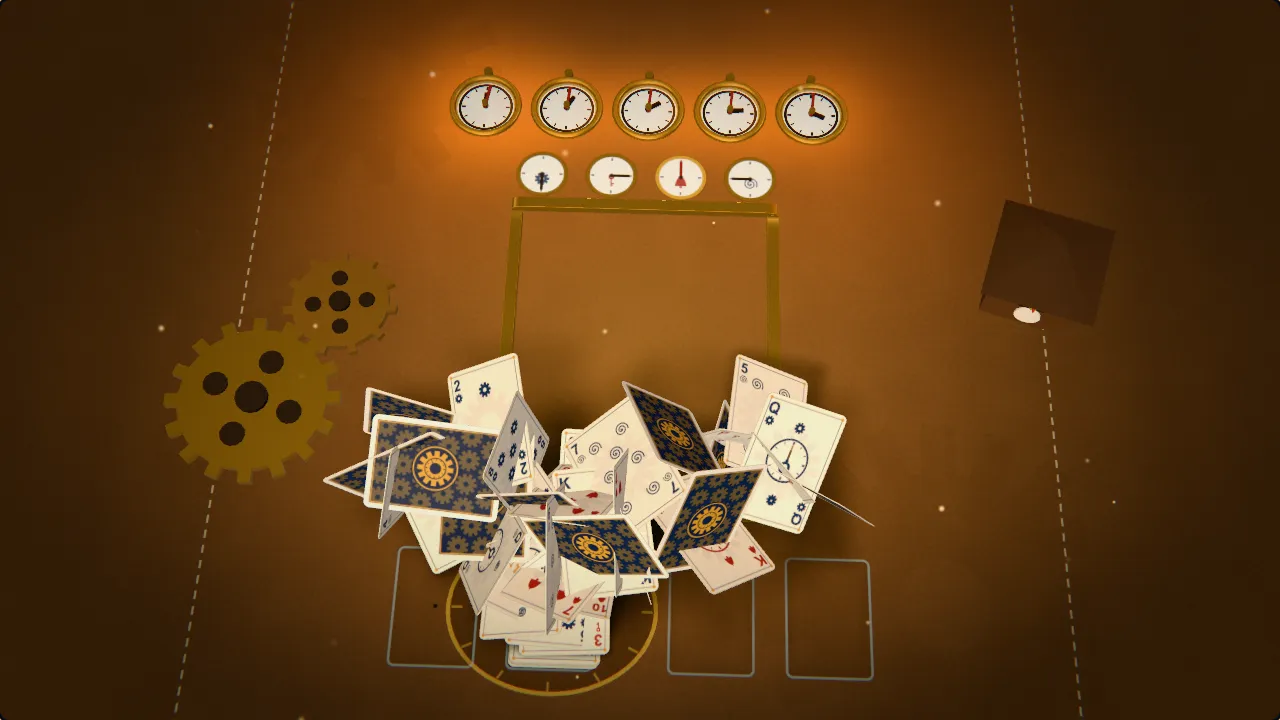
Clockmaker's workshop
Moonlit Observatory: Fortune Lane
Five deals, two rule cards each time, one row of pocket watches.
This game could not load.
About Moonlit Observatory: Fortune Lane
Moonlit Observatory: Fortune Lane is a solo card game played on a clockmaker's workbench, in the lamplight of a workshop that smells of oil and brass. Twenty-four cards lie in four trays of six, and a clock face waits beside them. Play the card at the left end of a tray when it is one rank above or below the card on the clock face, and the Ace and the King count as neighbours, so the face turns all the way round. Every card you take opens the one beside it.
Two drawers hold a card aside while you reach another, and the mainspring is a stock of fourteen that you wind over one card at a time. The four suits are parts of a movement: cogs, winding keys, bells and hairsprings, worth one to four steps a card. Clearing a tray winds every suit up one notch, and the dearest part falls back to the bottom of the dial, so the order of worth keeps turning like a gear train.
The game is a lane of five deals, and the five pocket watches above the bench are the lane. Before every deal the workshop lays two rule cards face up and you take one: a spare drawer, a deeper mainspring, a wild suit, double points for a tray, a longer streak. A watch races to twelve for each deal you clear and runs down to half past for one you lose, and the points of all five deals are added together. It is score only: a lost deal keeps what you made. Each time you clear a deal, the carved cuckoo flies out to the watches and calls once for every deal cleared so far.
Every deal is checked by a solving player before you see it, so it can always be cleared, and its par shows what a sharp player can reach. A lane saves where you leave it, in this browser only; nothing is uploaded.
How to play
- A lane is five deals. Before each one, take one of the two rule cards on offer. It changes that deal only.
- Only the card at the left end of a tray is open. Tap it, or drag it to the clock face, when it is one rank above or below the card showing there. The Ace and the King are neighbours.
- Put a card in a drawer to reach the one beside it: drag it there, or tap it and then the drawer.
- Wind a card over from the mainspring when no play is left. Clear a tray and every suit rises one notch in value.
- Clear every tray to win the deal and send its watch to twelve. The points of all five deals are added down the lane.
- Press H or the Hint button for a good move, and U or the Undo button to take a move back.
Controls
- Tap a card, or drag it to the clock face — play it
- Drag a card to a drawer, or tap it and then the drawer; R — park
- Tap the mainspring or press E — wind a card over
- Arrow keys or WASD, then Space or Enter; D-pad or stick, then Ⓐ — play
- Undo button, U or Ⓨ — undo; Hint button, H or LB — a hint
- P, Escape or Start — pause
Frequently asked questions
What do the five pocket watches show?
They are your lane. The watch of the deal in play is being wound; it races to twelve when you clear the bench and runs down to half past when a deal is lost. The points of all five deals are added together.
When does the cuckoo call?
Each time you clear a deal. The carved cuckoo flies out to the row of watches and calls once for every deal you have cleared in the lane so far, so the fifth cleared deal brings five calls, and the great bell rings with them.
Why do the suits change their worth?
The four suits are parts of a movement: cogs, winding keys, bells and hairsprings, each worth one to four, and a card scores ten points for every step of its suit's worth. Clearing a tray winds every suit up one notch and drops the dearest to the bottom, unless the deal's rule card turns them another way. The four small watches above the trays show where each one stands.
What is the mainspring?
The stock: fourteen cards to wind over onto the clock face, one at a time, when no card at the left end of a tray will play. Every card still in it when the bench is clear is worth 30 points, so wind it only when you must.
How do I choose between the two rule cards?
Look at the trays first. When the card you need sits deep in a tray, an extra drawer or four more turns of the mainspring help most; when a long run is in sight, take the card that doubles a streak or a tray. Each rule card changes the next deal only.
Related games
All Cards games → Klondike Solitaire The classic one-player card game — build all four suits up to the King. Pro game
 FreeCell Every FreeCell deal is winnable with the right moves — all 52 cards start face up. Pro game
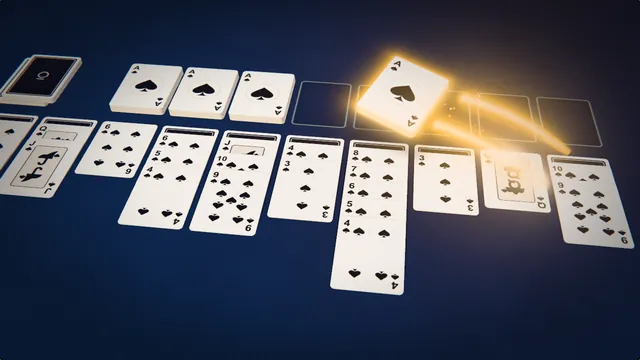 Spider Solitaire Build full King-to-Ace runs across ten columns to clear the board. Pro game
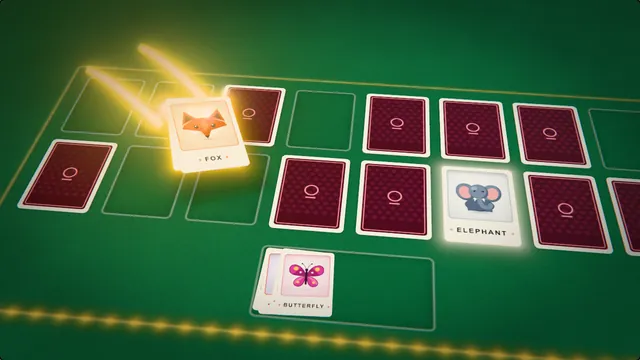 Memory Match Flip two cards at a time and find every matching pair. Pro game
 Moonlit Deck: Last Draw Three peaks, one moon dial and a draw pile that is running out. Pro game
 Moonlit Deck: Suit Garden Four beds, five lanes and a wagon full of seeds. Pro game